 EN
EN
Understanding Human Visual Perception in 3D Billboards
Binocular Disparity and Stereopsis: Creating Glasses-Free Depth
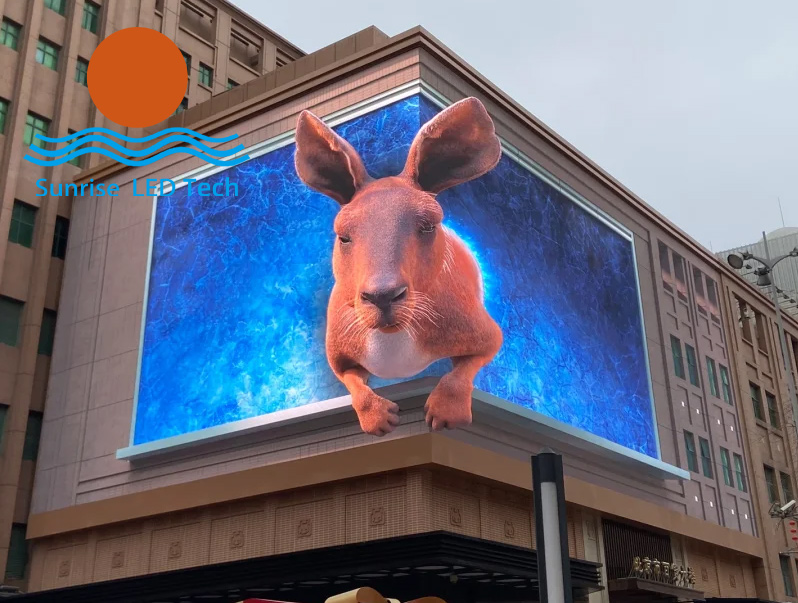
Our eyes work together in a pretty cool way called binocular disparity. Basically, each eye sees things from just a tiny bit different perspective. The brain then takes those two slightly different views and combines them into one image with depth perception. That's why we can tell how far away objects are. Some really smart tech companies have figured out how to trick our brains with 3D billboards. These displays show two separate images at once on big LED screens. One picture is meant for the left eye, the other for the right. Stand in the right spot (they call it the sweet spot) and boom! The brain does all the work merging those images together. Suddenly stuff looks like it's floating right out of the screen or sinking back behind it. People walking past these ads often stop and stare because the effect is so convincing and totally doesn't require any special glasses.
Forced Perspective: Using Size, Overlap, and Angles to Trick the Eye
When art directors want to create the illusion of depth, they turn to tried and true visual tricks without needing any special equipment. Bigger things look closer to us, while objects that overlap each other tell our eyes about their place in space. Think about when a product blocks part of what's behind it in an image. The way screens are angled matters too. Sometimes tilting something upwards or installing displays in curves can mess with normal perspective and make things appear more three dimensional. These methods actually complement each other pretty well. An object moving downward looks more realistic if the whole setup has a gentle upward angle. Sizes get smaller as they approach what we see as the far edge of the scene. Textures applied in different layers help distinguish what's in front versus what's in back. At the end of the day, all these effects depend on how our brains take flat images and somehow turn them into something that feels solid and real.
The Illusion Debate: When '3D' Billboards Are Not True Volumetric Displays
The majority of what we see as "3D" billboards out there are really just clever tricks for our eyes. They aren't actually volumetric displays at all. Real volumetric tech works differently. Think about those LED cubes or holograms that project light from multiple points in three dimensional space. This creates proper parallax effects and lets people view content from all angles around it. Most outdoor 3D advertising though? According to Digital Signage Trends 2023 report, about 92 percent relies on something called anamorphic projection. These are basically flat images stretched in ways that make them look three dimensional when viewed from certain spots. The effect can be pretty impressive visually, but technically speaking, they're still just flat surfaces playing with how our brains process visual information rather than generating real depth.
Core Technologies Powering 3D Billboard Effects
Anamorphic Projection and Dual-Image Rendering on LED Screens
Anamorphic projection works by warping images in such a way that they come together as a realistic 3D effect only from certain spots where people stand. The technique basically stretches visuals onto all sorts of weird surfaces like curved walls or building corners, depending heavily on getting the perspective just right so both eyes see what they need to at the sweet spot for viewing. When combined with those super bright LED panels that have really tiny pixels between them, this method creates 3D images that are spot on without needing any special glasses. Traditional projectors just can't handle this stuff. Modern LED setups keep looking sharp and clear even when the sun is beating down on them, which makes these systems work great in busy city areas where visibility matters most.
Stereoscopic vs. Holographic vs. LED Cube Volumetric Displays
Three technologies deliver authentic volumetric depth:
- Stereoscopic displays simulate depth via binocular disparity—projecting separate left/right views—but typically require glasses for full effect and lack true parallax.
- Holographic panels use light diffraction to reconstruct wavefronts, producing floating, depth-perceivable imagery; however, they face limitations in brightness, color fidelity, and narrow optimal viewing angles.
-
LED cube arrays physically emit light from stacked 3D coordinate points, forming tangible volumetric shapes visible from all directions—ideal for immersive, interactive installations despite higher cost and complexity.
Unlike anamorphic tricks, these systems generate measurable spatial volume—each balancing immersion, scalability, and real-world deployment constraints.
Design Principles Behind Realistic 3D Billboard Content
CGI Techniques: Lighting, Texture Layering, and Motion Choreography
The realism we see in those fancy 3D billboards comes down to CGI that actually mimics how light behaves in real life. When designers get directional lighting right, they create this amazing sense of space where shadows seem to sink back into the background while bright spots draw our eyes right out at us. Textures are another big deal too. Good ones mix different materials like metal finishes against fabric surfaces, then throw in all sorts of tiny details such as scratches or signs of wear that make everything feel touchable somehow. The way motion works on these displays is pretty clever too. Animations don't just play randomly; they actually track people walking past so images might swing towards pedestrians or shift when someone moves their head side to side, keeping things looking three dimensional even as folks walk by. According to some research published last year by the DOOH industry group, ads using these layered textures and changing lights were remembered about 68 percent better than boring old flat designs according to their Creative Effectiveness Report. At the end of the day, what makes these displays work isn't just technical stuff but understanding how humans perceive depth and movement, turning those LED panels into actual story telling platforms rather than just flashy screens.
Optimizing Viewing Experience Through Placement and Interaction
Strategic Viewing Angles, Installation Design, and Motion Sensor Integration
What really matters for good 3D billboards isn't just about having super sharp images but where they actually sit in relation to people's eyes. When setting these things up, it helps if they're around waist high maybe? Like between 1.5 meters and 2 meters off the ground works best because our eyes naturally focus there together. Also important is how the screens are angled so folks walking by don't see weird distortions when looking at them from different sides. Some installations now have motion detectors too which makes all the difference. These sensors kick in when someone gets close enough, changing what appears on screen based on exactly where that person stands. We've seen some cool stuff happen with computer graphics adding extra layers that pop outwards as if reaching toward passersby, or adjusting lights so shadows look right no matter the angle. All this tech talking back to the environment means the 3D effect stays solid and believable even as crowds move around, making sure everyone gets something interesting to look at regardless of where they happen to be standing.
Frequently Asked Questions
What is binocular disparity?
Binocular disparity involves each eye viewing slightly different aspects of the same object, which the brain combines to perceive depth.
How do anamorphic projections work?
Anamorphic projection involves distorting images on a flat surface so when viewed from certain angles, they appear three-dimensional.
What are LED cube arrays?
LED cube arrays emit light from 3D coordinates, creating volumetric shapes viewable from various angles.
What contributes to realistic 3D billboard content?
Realistic 3D billboard content relies on aspects such as CGI lighting, texture layering, and choreographed motion.
Why are motion sensors important for 3D billboards?
Motion sensors detect viewer proximity and adjust displayed content for optimal three-dimensional effects.