 EN
EN
Pixel Pitch, Resolution, and Image Clarity for Floor LED Screens
How Pixel Pitch Impacts Visual Clarity and Viewing Experience
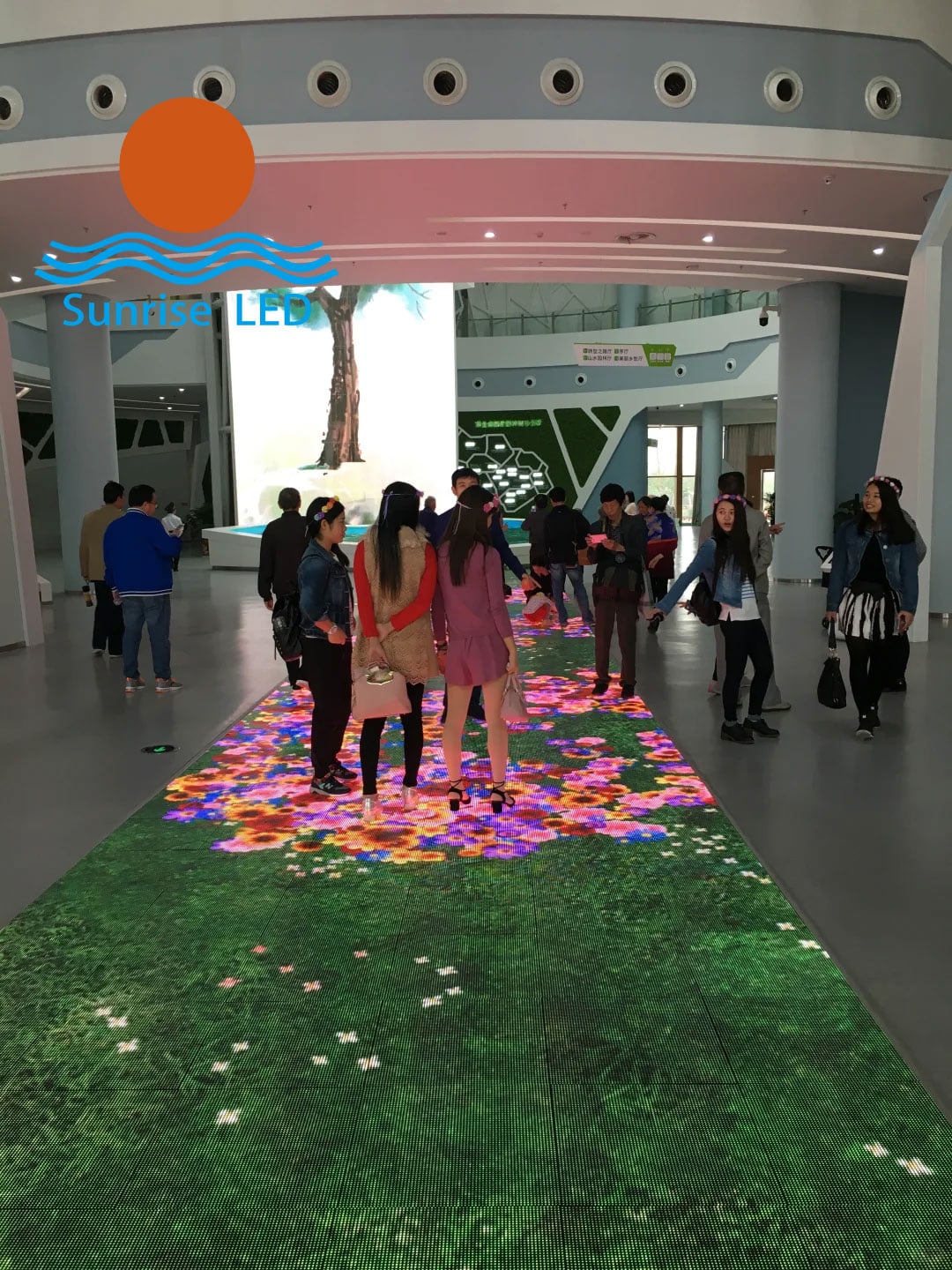
The term pixel pitch refers basically to how far apart those little LED lights sit from each other on a floor display, measured in millimeters. This measurement has a direct impact on how sharp images appear on these screens. When we talk about smaller pitches like P3 or below, what we get is higher pixel density which means clearer pictures when people are standing pretty close by, say within three meters. Retail stores and museums often need this kind of setup because visitors tend to approach displays closely. Take P2.5 as an example it packs around 160 thousand pixels into just one square meter area, making everything look almost life size. On the flip side, larger pitches starting at P6 work much better outdoors where folks typically stay farther away, maybe over ten meters back. These setups save businesses money too sometimes cutting costs down by nearly half while still maintaining good enough image quality for viewers at a distance.
Matching Resolution to Viewing Distance and Installation Environment
The ideal resolution depends on the installation context and viewer proximity:
| Pixel Pitch | Optimal Viewing Distance | Use Case |
|---|---|---|
| P1.8–P2.5 | 1.5–3 meters | Indoor interactive floors |
| P3–P4 | 3–6 meters | Airport terminals |
| P6–P10 | 6–15 meters | Outdoor plazas |
A 10m² floor screen with P3 pitch can achieve full HD resolution (1,920×1,080), making it effective for dynamic advertising in transit hubs. However, tighter pixel spacing increases LED density, raising power consumption by 18–22% compared to coarser configurations (EnergyStar 2023).
Balancing Image Quality with Cost: LED Density and Luminous Intensity Trade-Offs
Ultra fine pitch screens such as P1.2 can deliver stunning 4K quality images even when viewed from just 5 meters away, but there's a catch. These displays need around four times as many LEDs compared to standard P4 panels, which drives up the upfront cost by roughly $380 per square meter. For those watching their budgets, mid range options between P2.5 and P3.9 strike what most people would call a good middle ground. They work well indoors with brightness levels around 150 to 200 cd/m² and cut down on module costs by about 30%. The newer flip chip LED tech is making waves too. It boosts light output efficiency by nearly 35%, meaning these displays consume less power over time while still looking great on screen.
Brightness (Nit Level) and Environmental Visibility Performance
Understanding optimal brightness levels for indoor vs outdoor floor LED screens
The amount of brightness, usually measured in nits, really matters when we talk about how well something can be seen in different settings. Most experts agree on a simple rule of thumb these days: take the ambient light level in lux and divide it by two to get the recommended brightness in nits according to those 2023 display standards. Inside buildings, where the lighting generally sits between 300 and 700 lux, most screens work fine with around 150 to 500 nits. But things change completely outside. When displays are put out there under even indirect sunlight that can hit over 10,000 lux, they need at minimum about 2,500 nits just so people can actually see them without squinting.
| Environment | Ambient Light (lux) | Recommended Nits |
|---|---|---|
| Indoor (low light) | ≤200 | 150–300 |
| Retail/storefront | 800–1,200 | 550–800 |
| Outdoor shaded | 5,000–10,000 | 1,500–2,500 |
| Direct sunlight | ≥10,000 | 2,500+ |
How ambient lighting and viewing angles affect display visibility
When there's too much light around, people tend to see contrasts about 40% worse than normal, especially when sitting outside under sunlight. If someone looks at their computer screen from about 45 degrees sideways, screens with those wide viewing angles (like 160 degrees) start losing brightness pretty fast - roughly 28% gets lost out of sight. That makes it hard to read what's happening on the edges of the display if they're sitting next to big windows or under skylights. The good news is anti-glare coatings help quite a bit. These special treatments reduce reflections so much that light bounces around 65% less than regular screens do. People actually find it easier to read their displays even when there's lots of daylight coming through.
Ensuring environmental adaptability through dynamic brightness control
Integrated light sensors enable automatic brightness adjustment, reducing energy consumption by 55% in variable indoor environments and extending LED lifespan by 2.3 years (SZ Radiant 2023). Screens with IP65+ protection maintain consistent output (±15%) across extreme temperatures (-20°C to 55°C), preventing washout during intense sunlight or fog.
Key Takeaway: Balance brightness needs with environmental realities using adaptive controls and physics-grade protective materials.
Durability, Load Capacity, and Protection Ratings for High-Traffic Installations
Load-bearing requirements under foot traffic and heavy equipment
Floor LED screens in public spaces must support sustained loads of 500–1,500 kg/m² to safely accommodate pedestrian traffic and occasional equipment such as cleaning vehicles (Industrial Display Report 2024). Reinforced joints and corners help prevent micro-cracks, which contribute to 34% of early failures in high-traffic zones.
Material engineering and impact resistance in floor-mounted LED modules
Anodized aluminum alloy frames combined with tempered glass overlays offer six times greater impact resistance than standard acrylic. Advanced polymer coatings reduce scratch visibility by 82% after 10,000 simulated foot impacts, preserving image quality despite constant abrasion.
IP65 vs IP68 ratings: Moisture and dust protection for indoor and outdoor use
Industrial specs tell us that IP65 rated displays can handle light water spray from any direction, making them good enough for most indoor commercial spaces like shopping centers. When we need something tougher for outside areas around water features or damp pathways, IP68 rating becomes necessary. These top tier ratings mean total protection against dust ingress and the ability to sit submerged under about 1.5 meters of water without damage. Many newer display units come with built in humidity detection technology too. Once these sensors detect moisture levels going above 85% relative humidity, they trigger automatic draining mechanisms to prevent internal condensation buildup which could otherwise ruin sensitive electronics over time.
Case study: Failures due to inadequate durability or protection levels
Analysis of 120 failed floor LED installations revealed that 40% stemmed from underspecified load ratings leading to cracked modules, while 32% involved moisture damage from using IP54-rated screens in splash-prone areas. The average repair cost reached $18,000 per 10m²–160% higher than the upfront investment in properly rated systems.
Interactive Capabilities and Real-Time Display Responsiveness
Touch sensitivity, latency, and response accuracy in interactive floor LED screens
The best interactive floor LED screens have touch response times below 20 milliseconds, which makes all the difference when creating immersive exhibits at museums or during trade show events. These systems use infrared sensing technology that can pick up inputs down to about half a millimeter accuracy. They're pretty good at telling the difference between someone actually touching the screen versus just brushing past it accidentally, with around 99.4 percent recognition rate. And here's something cool about them too: special multi-touch algorithms let multiple people interact at once without messing up the 4K picture quality, even if there's bright sunlight coming through the windows.
Applications in retail, exhibitions, and entertainment requiring real-time feedback
Stores are starting to map out where customers hang around using those fancy floor displays, then tweak their deals on the fly based on who's lingering where. Some tests showed people stayed almost 20% longer when stores adjusted their promotions this way according to Retail Display Trends from last year. At museums, they've got these cool systems that kick in content as soon as someone moves past a spot, sometimes reacting so fast it feels like magic. Visitors can literally leave footprints that create art across historical displays. And don't get me started on dance clubs with floors that sense pressure changes. The lights flash right along with dancers' steps, all while keeping that visual effect just three frames behind what's happening on stage. Pretty impressive tech for making experiences feel more alive.
Integration with sensors and software for immersive user engagement
Advanced systems integrate LiDAR-based environmental mapping with CMS platforms to adjust projection angles within ±1° of viewer position. Modular software supports connectivity with IoT building systems, enabling daylight-responsive brightness adjustments that cut energy use by 34%. Field trials show these sensor-enhanced screens maintain 98.7% operational reliability after 5 million interactions (Digital Signage Journal 2023).
Installation Efficiency, Maintenance, and Total Cost of Ownership
Modular Design and Plug-and-Play Features for Fast, Flexible Installation
Modular designs reduce installation time by 40–60% compared to conventional setups, especially beneficial in busy environments like airports and shopping centers. Plug-and-play functionality allows rapid deployment with pre-calibrated panels, minimizing alignment errors and labor costs. This flexibility also supports seamless future expansion, meeting evolving venue demands.
Front-Access Serviceability and Hot-Swappable Components for Minimal Downtime
Front-access serviceability eliminates the need to dismantle the entire screen for repairs, allowing technicians to replace faulty LED modules in under 90 seconds. When paired with hot-swappable power supplies and control cards, this design reduces average downtime by 78% (Display Tech Report 2023), ensuring uninterrupted operation during peak hours.
Long-Term Value: Balancing Upfront Costs with Reliability and Maintenance Needs
Premium floor LED screens definitely come with a bigger price tag upfront, but they last around 100,000 hours which means far fewer replacements over time. The energy efficient versions can cut down on costs too, saving somewhere between $18 to $22 for every square meter each year when looking at power usage and maintenance needs. When shopping around, it makes sense to focus on models that have failure rates below 3% per year. Also check if the warranty actually covers those tricky driver components since this can really impact how much money gets spent throughout the life of the equipment.
Choosing Manufacturers With Proven Expertise in Floor LED Screen Solutions
Select suppliers with documented success in environments similar to your application–whether indoor galleries or outdoor plazas. Confirm certifications for minimum load capacity (1,500 kg/m²) and IP68 environmental protection. Opt for vendors offering technical support contracts with sub-four-hour emergency response times to avoid revenue loss during critical operations.
FAQs
What is pixel pitch in LED screens?
Pixel pitch refers to the distance between the centers of two adjacent pixels, typically measured in millimeters. It plays a crucial role in determining the clarity and sharpness of the display image.
Why is understanding brightness levels important for LED screens?
Brightness levels, measured in nits, are vital for ensuring visibility in varying lighting conditions. Appropriate brightness enhances image clarity without causing glare, especially in outdoor environments.
What does IP rating mean for floor LED screens?
IP ratings determine the level of protection against dust and moisture. For floor LED screens, IP65 ratings are suitable for indoor environments while IP68 is ideal for outdoor settings that may encounter heavy moisture or immersion.
How do modular designs benefit LED screen installation?
Modular designs offer simplicity and flexibility, reducing installation and maintenance time. They allow for easy expansion and minimal operational disruption, vital for dynamic environments.
Table of Contents
- Pixel Pitch, Resolution, and Image Clarity for Floor LED Screens
- Brightness (Nit Level) and Environmental Visibility Performance
- Durability, Load Capacity, and Protection Ratings for High-Traffic Installations
- Interactive Capabilities and Real-Time Display Responsiveness
-
Installation Efficiency, Maintenance, and Total Cost of Ownership
- Modular Design and Plug-and-Play Features for Fast, Flexible Installation
- Front-Access Serviceability and Hot-Swappable Components for Minimal Downtime
- Long-Term Value: Balancing Upfront Costs with Reliability and Maintenance Needs
- Choosing Manufacturers With Proven Expertise in Floor LED Screen Solutions
- FAQs