 EN
EN
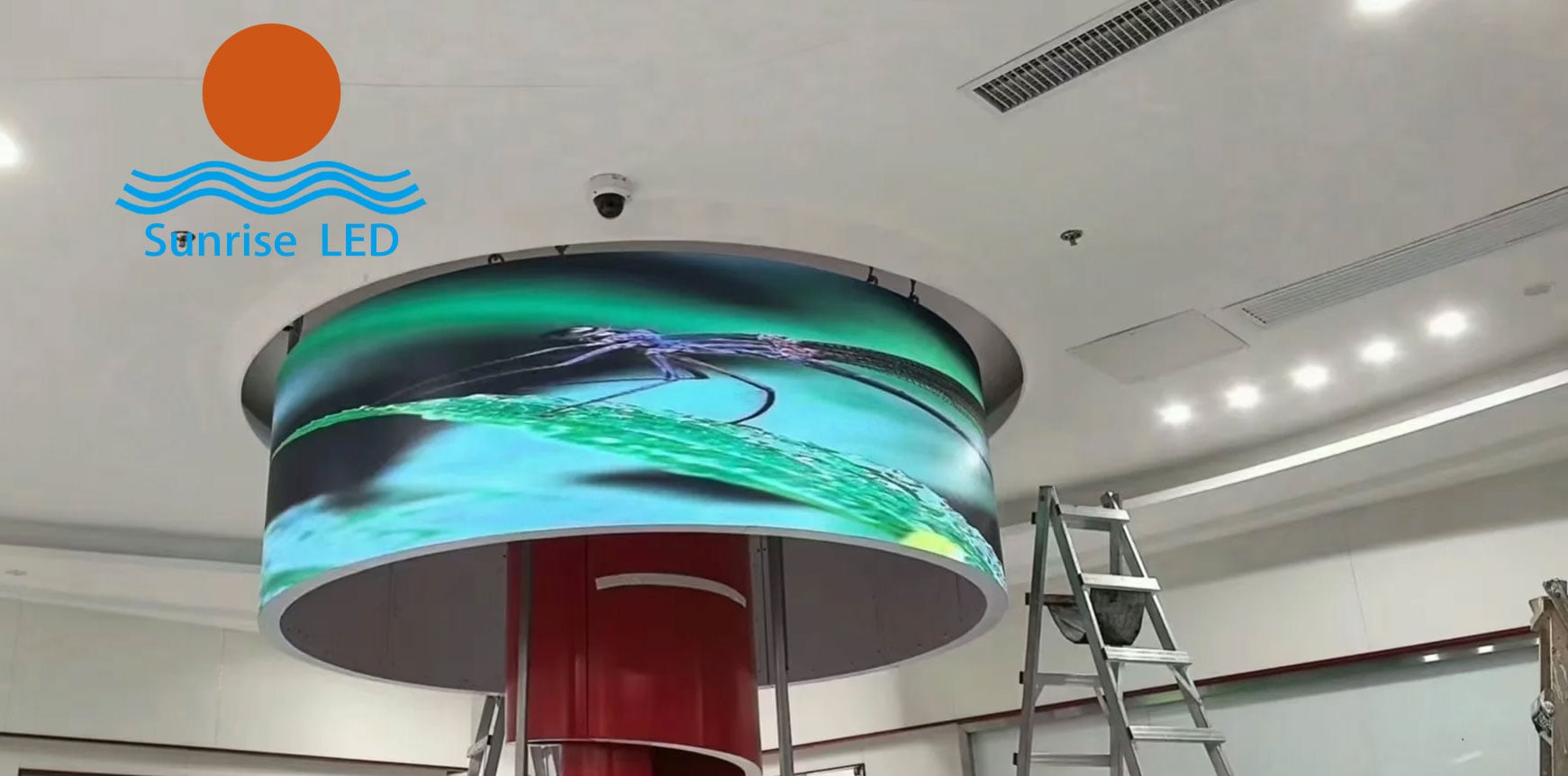
Core Technology Behind Flexible LED Display Flexibility
Bendable Structure and Inherent Flexibility of LED Screen Technology
The secret behind flexible LED displays lies in swapping out those stiff printed circuit boards for something stretchier called elastomeric substrates. Traditional screens get stuck with glass or metal backs, but these new ones bend thanks to flexible polymers such as polyimide, the stuff that makes foldable phones possible. They can actually curve around corners at angles up to 120 degrees without messing up the picture quality. Recent research from SID in 2023 showed most installations today rely on hexagon-shaped modules instead of squares. Why? Because those six-sided pieces cut down on stress at the bend points by nearly a third when compared to regular square tiles. Makes sense if we want our screens to last longer through all that flexing.
Material Composition and Substrate Engineering for Shape Adaptability
Three key material innovations enable shape adaptability:
- PET films: Polyethylene terephthalate substrates (0.2–0.5 mm thick) endure over 200,000 bending cycles at 10 mm radii.
- Hybrid solder pastes: Silver-coated copper particles in epoxy resins maintain electrical conductivity at curvatures below R500 mm.
- Encapsulation layers: Dual-cure silicone-polyurethane hybrids prevent moisture ingress even when stretched 8% longitudinally.
These advancements preserve a consistent 5,000:1 contrast ratio across both concave and convex surfaces.
Modular Design and Customization for Dynamic Curved Installations
Manufacturers utilize cross-shaped or puzzle-piece modules (ranging from 150–150 mm to 300–300 mm) that interlock at ±5° increments, allowing precise curvature adaptation. This modular approach supports diverse applications:
| Pixel Pitch | Minimum Curvature Radius | Recommended Use Case |
|---|---|---|
| P1.8 | R800 mm | Museum domes |
| P2.5 | R500 mm | Retail columns |
| P4.8 | R200 mm | Stage tunnels |
VDC Research (2023) reports modular systems cut curved display installation time by 52% compared to monolithic panels.
Pixel Pitch, Module Size, and Minimum Curvature Radius Compliance
The Flexible Display Consortium’s 2024 guidelines require the curvature radius (R) to exceed three times the module diagonal length. For example:
- A 200–200 mm module (283 mm diagonal) requires R ≈ 850 mm.
- Smaller 100–50 mm modules allow tighter curves down to 150 mm but increase inter-module calibration complexity by 70% (Arena Solutions Case Study 2023).
This standard ensures gap tolerances remain within 0.02 mm on double-curved installations.
Designing Flexible LED Screens for Curved Surface Compatibility
Matching Pixel Pitch and Viewing Angles with Installation Geometry
Optimizing pixel pitch is essential for image fidelity on curved surfaces. Displays with 1.5–2.5 mm pitch maintain visual integrity across 160° viewing angles when bent to an 800R curvature. Engineers favor tighter pitches (≈P2.5) for concave setups where viewers approach from multiple angles, reducing color shift by 12% versus conventional spacing.
Engineering Considerations: Bending Radius, Thermal Expansion, and Structural Load
Three critical factors ensure long-term performance:
- Bending radius: Modern flexible models withstand 800R curvature without circuit damage (Samsung’s bend tolerance study)
- Thermal dynamics: Advanced bonding adhesives accommodate 0.5mm/m² expansion at 40°C ambient temperature (LG Material Labs 2023)
- Structural loads: Vertical curved installations must not exceed 8kg/m² to avoid substrate delamination
Variability in Minimum Bending Radius Across Manufacturers
While many manufacturers claim 500R capabilities, 2024 stress tests reveal actual performance varies:
| Bending Radius | Panel Deformation Risk | Usable Installation Scenarios |
|---|---|---|
| 1000R | <3% | Gentle architectural curves |
| 800R | 5-7% | Retail display columns |
| 500R | 12-15% | Temporary exhibition structures |
Hexagonal modular designs enable 98% seamless coverage on complex geometries, though they require specialized tension calibration tools during setup.
Installation Techniques for Curved Flexible LED Display Systems
Comparison of Mounting Methods: Vacuum, Clamps, and Magnetic Brackets
When it comes to mounting solutions, finding the right balance between structural strength and geometric flexibility remains a key challenge. Most curved display installations rely on magnetic brackets these days, with statistics from szradiant indicating they account for about 85% of all commercial projects. These brackets work so well because they can precisely align components and handle pretty tight curves down to 800R radius. For temporary setups, vacuum systems are often the go to choice since they support weights around 50kg per square meter while maintaining a 5mm positioning accuracy. Mechanical clamps take a different approach though, providing rock solid stability in situations where stress levels are high. Thermal expansion management requires leaving at least a 3mm gap between modules along edges. This recommendation isn't just theoretical either. Failure analyses conducted in 2024 revealed that when this spacing rule gets ignored, roughly 38% of warping problems occur specifically in displays with radii under 500mm.
Step-by-Step Alignment and Installation Process for Seamless Curvature
Professional installers follow a seven-stage protocol to achieve flawless curvature:
- Surface preparation (≈3° deviation from target curvature)
- Template-guided panel positioning (0.8mm alignment precision)
- Mesh-mapping software calibration (70% faster than manual methods)
- Conductive adhesive pre-treatment at 45°C (±2°)
- Sequential roll-pressing (minimum 3kg/cm² pressure)
- UV curing at 395nm wavelength (30-second intervals)
- 72-hour stress relief period before power activation
The integration of real-time curvature monitoring systems has reduced post-installation repairs by 61% since 2023, especially in concave architectural settings.
Adhesives and Bonding Solutions for Secure Attachment on Curved Surfaces
Effective bonding must address both mechanical stress and thermal fluctuations:
| Parameter | Industry Standard | Failure Threshold |
|---|---|---|
| Peel Strength | ≈800g/25mm (ASTM D3330) | ≈500g/25mm |
| Thermal Cycling | 5,000 cycles (-20°C to 60°C) | Delamination at 2,800 |
| Vibration Resistance | 15G @ 50Hz | SMD displacement at 18G |
Conductive silver adhesives now deliver 0.5Ω/cm resistivity while maintaining 120° bend flexibility, enabling direct component attachment on curved substrates. Viscoelastic damping interfaces further reduce connector fatigue by 73% in environments with over 25°C thermal variance—crucial for outdoor installations subject to seasonal shifts.
Overcoming Challenges in Curved Flexible LED Display Installation
Minimizing Visual Gaps and Ensuring Surface Smoothness in Curved Layouts
Achieving seamless visuals demands alignment precision within 1–3mm, a benchmark met by 85% of commercial projects. Magnetic mounting brackets combined with hexagonal panel designs help maintain uniform tension across irregular curves. Mesh-mapping software enhances efficiency and accuracy, delivering 98% surface smoothness even on complex concave installations.
Tension Control and Thermal Management to Prevent Delamination
Thermal shifts contribute to 60% of warping issues in curved LED setups (TÄV Rheinland 2024). Modern conductive adhesives handle 0.5mm/m² expansion at 40°C ambient conditions. Post-installation practices such as active cooling and 24-hour burn-in tests validate thermal resilience, while maintaining setup environments below 25°C reduces long-term delamination risks.
Balancing High Flexibility with Long-Term Durability Under Stress
Long-term durability depends on substrates that retain elasticity after 10,000+ bending cycles. Rigorous stress testing ensures structural integrity under repeated flexing and seasonal expansion. Industry best practices recommend leaving a 3mm edge gap during installation to absorb mechanical stress without sacrificing curvature accuracy.
FAQs
What is the core technology behind flexible LED displays?
Flexible LED displays utilize elastomeric substrates instead of traditional rigid circuit boards. This technology allows the display to bend and curve, using flexible polymers such as polyimide, which are also found in foldable phones.
How do flexible LED displays maintain picture quality when bent?
The use of hexagon-shaped modules reduces stress at bend points, preserving picture quality without affecting the display's integrity when curved up to angles of 120 degrees.
What materials enable shape adaptability in flexible LED displays?
Key materials include PET films, hybrid solder pastes, and encapsulation layers, which collectively contribute to the display's flexibility and durability under bending forces.
How does modular design aid in flexible LED display installations?
Modular designs, such as cross-shaped or puzzle-piece modules, interlock at specific angles to conform to various curvatures, making them adaptable for diverse applications like museum domes and retail columns.
What are the recommended installation practices for curved flexible LED displays?
Installers use precise alignment techniques, mesh-mapping software, and thermal management processes to ensure seamless, durable installations with minimal risk of delamination.
Table of Contents
- Core Technology Behind Flexible LED Display Flexibility
- Designing Flexible LED Screens for Curved Surface Compatibility
- Installation Techniques for Curved Flexible LED Display Systems
- Overcoming Challenges in Curved Flexible LED Display Installation
-
FAQs
- What is the core technology behind flexible LED displays?
- How do flexible LED displays maintain picture quality when bent?
- What materials enable shape adaptability in flexible LED displays?
- How does modular design aid in flexible LED display installations?
- What are the recommended installation practices for curved flexible LED displays?