 EN
EN
Pixel Pitch and Image Clarity: Optimizing Visual Resolution for Stage Screen LED Displays
Understanding Pixel Pitch and Its Impact on Image Resolution
The term pixel pitch refers basically to how far apart those little LED lights are from each other, and this spacing has a direct effect on image quality. When the gap between pixels gets smaller (we measure these gaps in millimeters), we can fit way more LEDs into the same space. That means better picture sharpness, especially important if people are going to be sitting right up close to the screen. Take for instance P2.5 displays which manage around 160 thousand pixels per square meter. Compare that to P4.8 setups at about 44 thousand pixels per square meter and suddenly the difference becomes pretty obvious. The real world impact matters most during events where presenters need to show intricate designs or small font sizes on stage screens. If the text looks blurry or the images aren't crisp enough, the whole presentation suffers no matter how good the content actually is.
How Pixel Pitch Affects Viewing Distance and Audience Experience
The optimal viewing distance follows a well-established formula:
Optimal Distance (meters) = Pixel Pitch (mm) × 2–3 For instance, a P3.9 screen requires viewers to be 7.8–11.7 meters away for seamless image blending. This principle guides production choices: stadiums often use 6mm+ pitches suited for distant audiences, while theaters increasingly adopt sub-3mm configurations to accommodate front-row guests without visible pixelation.
Comparing Fine vs. Standard Pixel Pitch for Indoor and Outdoor Setups
| Environment | Typical Pitch Range | Use Case |
|---|---|---|
| Indoor stages | P1.9–P2.6 | Corporate events, theater |
| Outdoor festivals | P4.8–P6.9 | Stadium concerts, large festivals |
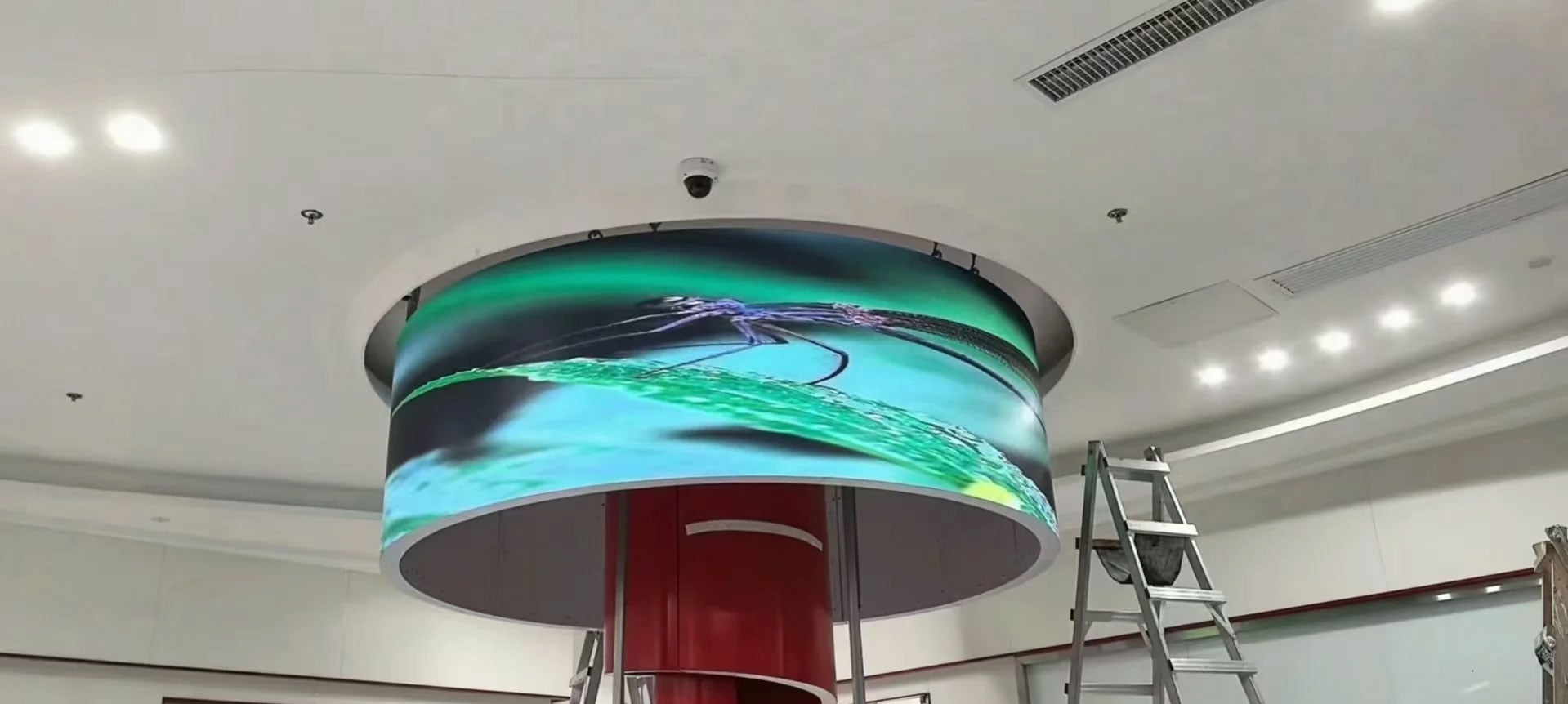
Industry research shows that 72% of production teams prioritize finer pitches ( Advances in micro-LED technology have reduced minimum viable pitch from 4.8mm in 2019 to as low as 1.5mm by 2023, enabling 8K resolutions on large-scale stage screens. Today, major touring acts standardize on P1.9–P2.5 displays—a 40% adoption increase since 2021—to ensure flawless visuals during live broadcasts and close-up camera shots. Brightness requirements vary significantly by environment. Outdoor stage screen LED installations require 5,000–10,000 nits to remain visible under direct sunlight (LinkedIn Industry Report 2024), whereas indoor venues like theaters perform best at 800–1,200 nits. Exceeding these levels risks viewer discomfort indoors or washed-out images outdoors. A contrast ratio of at least 5,000:1 ensures visual legibility in mixed lighting, preserving subtle details such as shadow textures in concert backdrops or gradients in corporate branding. High-contrast displays have been shown to improve audience focus by 37% in challenging lighting scenarios. Modern stage screen LED systems cover ≥97% of the DCI-P3 color gamut, making them ideal for matching brand-specific Pantone colors or displaying film-grade content. A 2024 performance study found that narrow-gamut displays can distort red hues by up to 18% at 45° viewing angles, compromising color fidelity in live commercials and broadcast applications. Professionals use closed-loop calibration systems combining spectrophotometers and AI-driven software to synchronize color across thousands of LED modules. This process eliminates the “patchwork effect†in panoramic installations, maintaining ≤0.5 JNCD (Just Noticeable Color Difference) across expansive arrays—even after extended operation. The refresh rate of an LED screen, measured in Hertz (Hz), basically tells us how many times per second the display actually refreshes what we see on screen. When we talk about higher numbers like 3840Hz or even 7680Hz, these really make a difference because they cut down on motion blur and get rid of those annoying flickers that can ruin broadcast quality stuff. According to some tests done last year, screens with refresh rates under 1920Hz ended up showing visible problems in about two thirds of all fast action concert videos tested. That's why professionals care so much about getting those rates right when setting up their equipment. Synchronizing the display’s refresh rate with camera frame rates prevents rolling shutter effects during panning or rapid movement. Engineers have demonstrated that 7680Hz refresh rates eliminate flicker even when filming at 240fps slow-motion speeds, allowing broadcast crews to capture dynamic performances—from pyrotechnics to choreography—without post-production correction. Displays with ≥3840Hz refresh rates maintain sharpness during high-speed visuals like laser sequences or drone light shows. Benchmarks show this reduces edge ghosting by 42% compared to 1920Hz panels, ensuring both live audiences and remote viewers experience uninterrupted immersion. Ultra-high refresh rates demand robust control systems to avoid signal delays. Modern stage screen LED setups employ parallel processing architectures to achieve <3ms latency at 7680Hz, supporting real-time graphics triggers while maintaining stable, round-the-clock operation. Contemporary stage screen LED systems offer 160–170° viewing angles, ensuring consistent color and brightness across wide seating arrangements. This broad coverage eliminates “dead zones†common with older 120° panels. In arena-style venues, this capability enhances engagement: a 2023 live events study found side-section satisfaction increased by 28% when using displays with ≥160° viewing angles. Manufacturers now provide configurable LED cabinets in hexagonal, curved, transparent, and standard rectangular formats. This modularity supports diverse staging needs: *Compared to fixed-size displays (2024 StageTech Report) Hot-swappable panels allow last-minute adjustments, proving invaluable when adapting to unexpected venue constraints during tours. Plug-and-play support for DMX, Art-Net, and SMPTE protocols enables seamless integration with lighting rigs and media servers. Advanced systems include: This interoperability cuts AV integration time by 65% compared to proprietary solutions (ProAV Magazine 2023). A European concert tour successfully deployed a 520m² modular LED system across 17 venues with varying backstage access. The crew achieved: As the technical director noted: “We’ve eliminated ‘this venue can’t handle our screen’ from our vocabulary.†(Live Production International 2024) Reliable maintenance workflows are essential for minimizing downtime. Dual-sided access allows technicians to replace faulty modules from either side—critical in space-constrained environments. Hot-swappable 500×500mm tiles can be replaced in under 90 seconds without powering down adjacent sections, ensuring continuity during ongoing productions. The panels are protected against dust, smoke, and even stuff left over from fireworks thanks to industrial strength aluminum casings and special protective coatings. The system actively manages heat so it stays under 95 degrees Fahrenheit for those long 18 hour sessions. This helps maintain consistent colors on screen and makes sure the light emitting diodes last around 100 thousand hours before needing replacement. And because of the closed loop cooling system, the fans barely make any noise at all - below 25 decibels which means they won't bother anyone trying to record sounds live. Stage screens used for touring can handle pretty intense transportation stress, surviving impacts equivalent to around 50 G-forces without losing their pixel alignment, which stays within about a tenth of a millimeter. At actual outdoor music festivals, we've seen IP65 rated panels keep working almost all the time even when hit by rain and extreme weather conditions. These panels have operated successfully through freezing temperatures down near minus 30 degrees Celsius and sweltering heat up past 50 degrees Celsius. The systems also come equipped with built-in humidity sensors that constantly monitor conditions and tweak power settings as needed. This helps stop moisture buildup inside the equipment whenever they get moved quickly between different venues with varying climates. Pixel pitch refers to the distance between the centers of two adjacent pixels, measured in millimeters. It directly affects the image clarity; smaller pixel pitches result in higher resolution displays with sharper images. Pixel pitch is crucial for stage screens as it determines the clarity of the visuals. Smaller pixel pitches are essential where the audience is close to the screen, ensuring text and images are sharp and clear. The optimal viewing distance is roughly two to three times the pixel pitch. For example, a screen with a 3.9mm pitch would suit viewers sitting 7.8 to 11.7 meters away. Indoor LED displays often have finer pixel pitches (P1.9–P2.6) for closer viewing, while outdoor setups might use larger pixel pitches (P4.8–P6.9) to balance resolution with visibility under sunlight. Brightness affects visibility; outdoor displays need 5,000–10,000 nits to combat sunlight, while indoor displays usually need 800–1,200 nits to provide comfortable viewing conditions.Trend Analysis: The Shift Toward Ultra-Fine Pitch Displays in Live Performances
Brightness, Contrast, and Color Performance for Maximum Visibility
Brightness (nits) and visibility under indoor vs. outdoor lighting conditions
Contrast ratio and visual depth in dark or high-glare stage environments
Color accuracy and gamut: Delivering vibrant, brand-consistent visuals
Calibration techniques for uniform color across large stage screen led arrays
Refresh Rate and Flicker-Free Performance in Live Capture
Why refresh rate matters for video recording and live streaming of stage events
Matching refresh rate with camera frame rate to eliminate flicker
High refresh rates and smooth motion rendering during dynamic performances
Balancing high refresh rates with processing latency and system stability
Viewing Angle and Modularity for Flexible Stage Integration
Maximizing Audience Immersion with Wide Viewing Angles
Modular Design Enabling Customizable Screen Sizes and Shapes
Configuration
Typical Use Case
Setup Time Reduction*
Multi-screen
Festival stages
35-40%
Overhead canopy
Immersive theater
50%
360° cylinder
Award ceremonies
60%
Control System Compatibility and Integration with AV Workflows
Case Study: Rapid Deployment of Modular Stage Screen LED Walls at Touring Events
Durability, Maintenance, and Long-Term Reliability of Stage Screen LED Systems
Front and Rear Maintenance Access with Hot-Swappable Modules
Build Quality and Thermal Management Under Continuous Operation
Ensuring Reliability in Touring and High-Demand Performance Environments
FAQ
What is Pixel Pitch?
Why is Pixel Pitch Important for Stage Screens?
How Does Pixel Pitch Influence Viewing Distance?
What is the Difference Between Indoor and Outdoor LED Displays?
What Role Does Brightness Play in LED Displays?
Table of Contents
- Pixel Pitch and Image Clarity: Optimizing Visual Resolution for Stage Screen LED Displays
- Brightness, Contrast, and Color Performance for Maximum Visibility
- Refresh Rate and Flicker-Free Performance in Live Capture
- Viewing Angle and Modularity for Flexible Stage Integration
- Durability, Maintenance, and Long-Term Reliability of Stage Screen LED Systems
- FAQ