 EN
EN
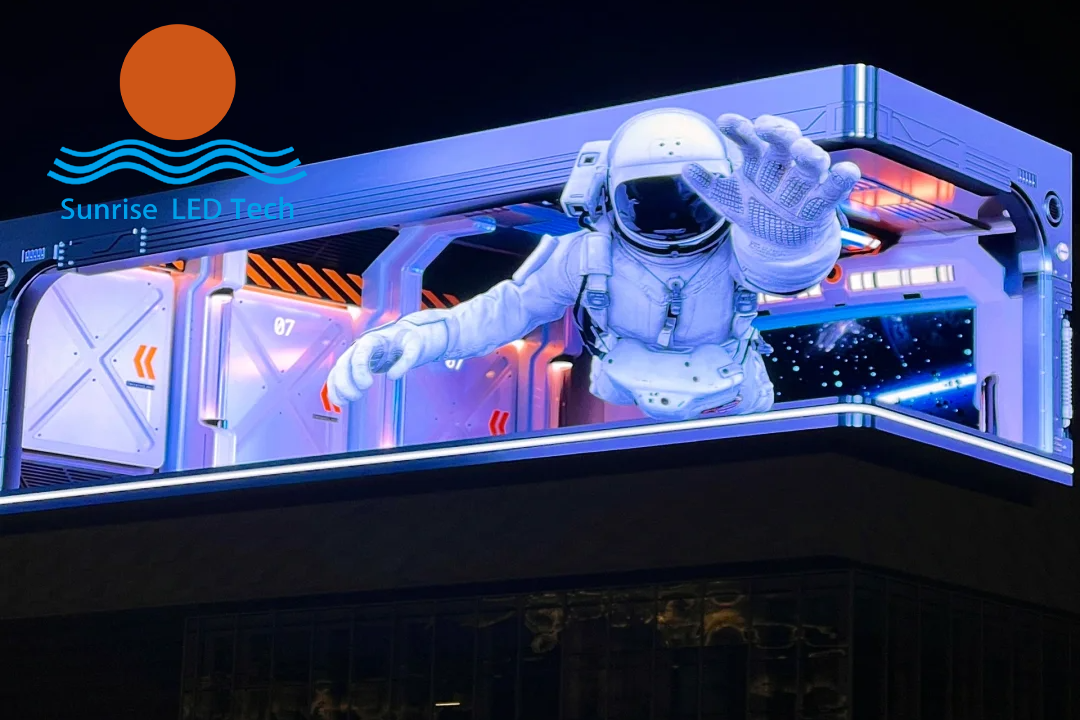
The Science Behind 3D Depth Illusions in Billboards
Understanding Stereopsis and Binocular Disparity in 3D Visualization
The way humans see depth comes down to something called stereopsis, basically what happens when our brains combine those slightly different pictures each eye sees into one three dimensional view. When it comes to 3D billboards, they work kind of like this natural process by showing layers that give separate views for the left and right eyes. Recent research back in 2023 showed people actually pay more attention to these kinds of displays than regular flat advertisements, probably because our brains are wired to notice things in space naturally. This makes sense if we think about how we navigate through everyday life, constantly judging distances between objects without even realizing it.
How 3D Billboard Technology Creates Depth Illusions Through Perceptual Manipulation
Modern display tech plays tricks on our brains using things like anamorphic distortion and forced perspective. The way it works? Some fancy angled LED panels take flat images and make them look 3D from certain angles. Pretty cool stuff actually. Now this is different from regular holograms that need all that complicated light diffraction business. These newer systems basically take advantage of how we perceive edges and patterns naturally. And the best part? No need for those annoying 3D glasses everyone hates. Just stand in the right spot and boom, suddenly there's depth where there shouldn't be any.
The Role of Anamorphic Perspective in 3D Digital Billboards
Anamorphic billboards work by stretching images using mathematical calculations, usually around 17 to 23 percent for most city setups. These stretched visuals only look right from certain spots where they transform into images with real depth. We saw this in action during a big sports brand campaign in Tokyo last year. They had a billboard that made a sneaker seem like it was floating almost two and a half meters out from the actual sign. The trick? Careful warping of pixels so everything lines up just right when people walk along the street. Pretty impressive stuff for something that looks completely off angle from most places.
Optical Illusions in 3D Advertising Displays: Principles and Applications
By combining motion parallax (dynamic shifting as viewers move) and occlusion effects (overlapping layers), 3D billboards amplify realism. Recent campaigns report 66% higher recall rates using these principles versus static ads. Key applications include:
- Simulating floating objects (30–50 cm perceived protrusion)
- Creating "tunnel" effects through converging lines
- Animating depth transitions synchronized to viewer positions
Core Display Technologies: LED, Holography, and Projection Systems
High-Resolution LED Screens and Display Hardware Enabling Vivid Imagery
The latest generation of 3D billboards makes use of densely packed LED panels where the pixels are spaced under 2.5mm apart, which helps create those stunning 8K images that really pop with depth. The color handling gets pretty impressive too thanks to sophisticated driver chips that smooth out color changes across a wide range of colors (around 16 bits worth). And the way these boards are built in modules means they can be expanded easily when needed for bigger displays. Even during bright daylight hours, these boards stay at around 3,500 nits of brightness so people can still see them clearly from a distance. At the same time, they don't guzzle electricity because smart power controls kick in when full brightness isn't necessary.
Holographic Techniques vs. Pseudo-3D Effects in Digital Signage
Real holograms work by using something called laser interferometry to actually project three dimensional images into the air itself. These genuine holographic displays give viewers about 40 percent more viewing angle compared to what we typically see in those fake looking 3D setups. Most of what people think is 3D these days just plays tricks with our eyes through things like parallax effects and clever shading techniques. But real holography works differently, it manipulates the actual light fields to create that 3D effect without needing special glasses. The latest prototype systems can hit around 120 frames per second refresh rate, which is pretty impressive. Still, getting this tech into mainstream markets has been tough because manufacturing costs run well over twelve thousand dollars per square meter right now. That kind of price tag keeps most companies from seriously considering adoption at scale.
Stereoscopic Projection Systems Delivering True 3D Experiences Without Glasses
Autostereoscopic displays work by using lenticular lenses that offer around 160 degree viewing angles. This setup lets multiple people see 3D images at the same time when the pixels are aligned just right. The technology typically features two layers of LCD panels spaced about 1.2 millimeters apart. This spacing creates those dynamic depth effects we associate with 3D visuals, and allows viewers to adjust their focus in real time as they move around. Many modern systems also incorporate eye tracking cameras that refresh at 60 hertz. These cameras help shift the displayed content based on where viewers are looking, which keeps the 3D effect working properly even when lots of people are watching from different angles in busy places like city streets or public transportation hubs.
Designing Immersive 3D Billboard Experiences
Anamorphic Projection and Distorted Perspectives for Street-Level 3D Impact
The latest 3D billboards work by creating special distortions that only make sense when someone looks at them from certain spots on the street. What happens is pretty cool actually, these boards play with how our eyes see things differently, making the images look much deeper than regular ads do maybe around 30 to 50 percent deeper according to some research. Cities have started putting up these kinds of installations where what starts out looking like just another flat poster somehow turns into something three dimensional as people walk past at certain angles, typically between 25 and 35 degrees from straight ahead. Big name companies report getting about twice as much attention from passersby with these clever visual effects rather than standard two dimensional posters, based on recent studies looking at city advertising effectiveness throughout 2024.
Curved Design and Wide Viewing Angles (160–270 Degrees) for Audience Immersion
The curved 3D billboards create an immersive experience by surrounding viewers within a massive 210 degree viewing cone, keeping depth perception consistent on about 85% of the display surface. Traditional flat screens start losing their three dimensional quality once someone moves past a 45 degree angle from center, but these concave designs maintain the visual illusion thanks to careful engineering of their curve radius, usually somewhere between 8 and 12 meters. What makes this work so well is something called the retinal overlap zone, where both eyes get matching stereoscopic signals that keep people immersed whether they're standing 15 meters away or all the way back at 60 meters. The modular LED panels also feature advanced 16 bit color processing, which means smooth color transitions remain intact even when installed in those super wide 270 degree setups commonly found in busy transportation centers around the world.
Motion and Dynamic Elements in 3D Billboard Design for Attention Capture
When it comes to 3D advertising campaigns, real time parallax scrolling combined with moving parts really grabs attention. The servo systems work together to tilt or extend parts of billboards between half a hertz to two hertz, creating those cool depth effects people tend to stare at longer. According to some research from Neuroscience of Vision back in 2023, these kinds of movements actually keep eyes on the display about 19% longer than static ads. Looking at heat maps of where consumers focus their gaze reveals something interesting too. When foreground items move quicker than what's in the background, folks spend around 33% more time looking at the ad. New tech is bringing even cooler stuff to the table now. Some displays respond to wind conditions while others have shadows that change throughout the day, making everything look like it exists in three dimensions rather than just sitting there flat against a wall.
Software and Digital Tools for 3D Billboard Content Creation
Software used in 3D billboard content creation: CGI and motion graphics integration
The latest 3D billboard workflows depend heavily on standard CGI software packages that can manage those realistic textures and complicated shapes we all love seeing. Designers nowadays are creating these layered scenes where they mix 3D models with cool particle effects and lighting that actually looks like real light bouncing around. When it comes to motion graphics, the platforms available today bring time into the equation so animations sync properly with whatever physical structure the billboard sits on. According to a recent survey from last year among folks working in digital signage, about four out of five professionals reported using parametric modeling tools to tweak their content automatically based on screen size differences and how people actually view things at various angles.
3D animation and rendering for billboards: From concept to screen
The animation pipeline transforms static 3D models into engaging narratives through four key stages:
- Previsualization – Blocking camera movements against billboard dimensions
- Texture baking – Optimizing surface details for outdoor viewing conditions
- Lightmap rendering – Simulating real-world shadows and reflections
- Distributed rendering – Utilizing cloud-based render farms to cut processing times by 65% compared to local workstations
Advanced ray-tracing engines now achieve 16K resolution outputs with ambient occlusion effects tailored for large-format displays.
Digital signage software for managing 3D billboards remotely
Centralized control systems enable real-time content updates across global 3D billboard networks through automated quality checks:
| Feature | Impact on Operations |
|---|---|
| Brightness calibration | Maintains visibility in direct sunlight |
| Content versioning | Enables A/B testing of 3D creatives |
| Predictive maintenance | Reduces downtime by 42% through component health monitoring |
These platforms use edge computing to locally process audience engagement metrics while maintaining sub-100ms synchronization between connected displays.
Enhancing Visual Impact with Lighting, Motion, and Display Performance
Role of Lighting, Perspective, and Animation in 3D Displays
The latest generation of 3D billboards plays clever tricks with light to give the illusion of depth. They cast directional shadows and maintain contrast ratios way above 5000:1, which makes things pop off the surface. The perspective is calibrated so people see consistent depth from almost any angle within about 160 degrees of view. Frame by frame animations create motion effects similar to how objects actually move in our world. What happens next is pretty fascinating, the brain gets fooled into thinking there are layers and dimensions where there's just paint on a flat board. Some folks swear they can almost reach out and touch those floating images.
High Refresh Rate (3840Hz) and HDR Technology with 16-Bit Color Depth for Smooth Visuals
The latest generation of 3D billboards now runs at an impressive 3840Hz refresh rate, which basically gets rid of that annoying motion blur when scenes change quickly. This matters a lot for things like showing sports highlights where action happens super fast. When paired with HDR tech and those fancy 16-bit colors, these screens can actually show about 98% of the DCI-P3 color range. What does that mean? Well, the colors blend together so smoothly that most people won't notice the banding effect that plagues older 10-bit systems. Tests have shown this reduction in banding is around 83%, making the overall image quality much cleaner and more professional looking.
Use of Advanced Driver ICs and LED Modules for Enhanced Brightness and Clarity
Recent advancements in driver integrated circuits (ICs) enable granular control over 10,000+ LED clusters per square meter, achieving peak brightness levels of 5,000 nits for daylight visibility. Modular LED designs with redundant pixel mapping ensure 99.96% operational uptime, while anti-glare optical coatings maintain contrast ratios above 3000:1 in direct sunlight conditions.
FAQ
What is stereopsis and how does it relate to 3D billboards?
Stereopsis is the process by which the brain combines the slightly different images perceived by each eye into a single three-dimensional view. 3D billboards use layers to create separate views for the left and right eyes, mimicking this natural process to give the illusion of depth.
How do anamorphic billboards function?
Anamorphic billboards function by stretching images using mathematical calculations so they appear with real depth from specific viewing positions. The manipulation of pixels aligns perfectly when viewed from particular angles, making objects seem to protrude significantly from the billboard.
Why are holographic displays not widely adopted?
Holographic displays utilize laser interferometry for projecting true three-dimensional images, providing a wider viewing angle. However, high manufacturing costs, exceeding twelve thousand dollars per square meter, prevent widespread adoption in mainstream markets.
What technology allows viewers to see 3D images without glasses?
Autostereoscopic displays employ lenticular lenses that permit multiple viewers to see 3D images simultaneously without glasses. They utilize LCD panels spaced apart to achieve dynamic depth effects viewed from various angles.
How do curved design billboards enhance audience immersion?
Curved design billboards provide a massive viewing cone, maintaining depth perception across most of their surface due to careful curve radius engineering. They allow audiences to experience consistent 3D effects from wide angles, enhancing immersion significantly.