 EN
EN
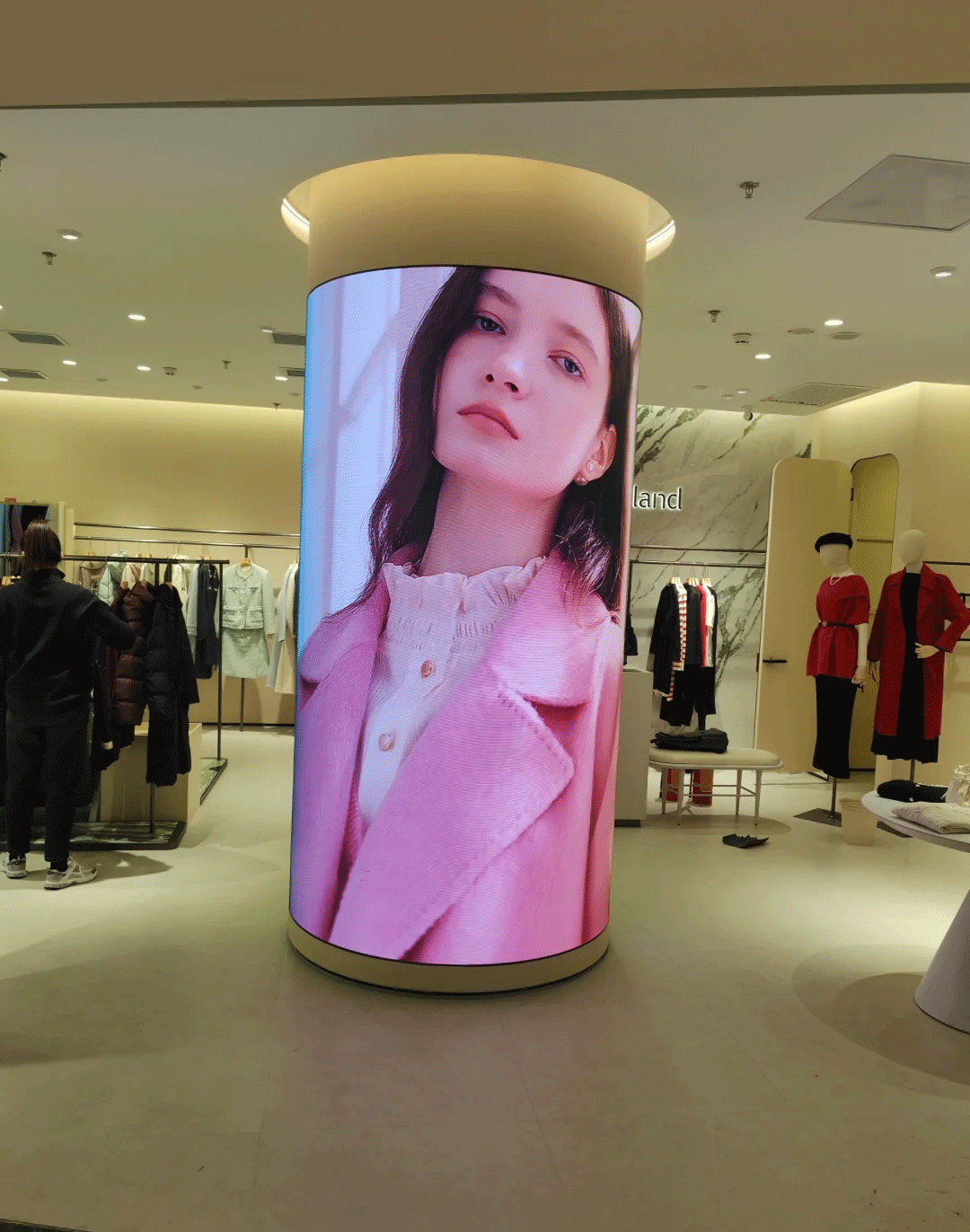
How Flexible LED Display Technology Enables True Curved Surface Integration
Elastomeric substrates, polyimide (PI), and PET films: enabling dynamic bendability without pixel failure
The backbone of today's flexible LED displays is made up of advanced polymer materials. When these screens get bent repeatedly, the elastomeric substrates take care of absorbing all that mechanical shock. Meanwhile, polyimide layers keep circuits intact even when bent around corners as tight as 500 mm radius. PET films do double duty too they let light pass through clearly while resisting moisture damage, which means these displays can handle well over 200,000 bends before any pixels start failing. What makes these layered materials so special? They actually spread out mechanical stress across the entire display surface, keeping it away from those delicate micro-LED chips. This becomes really important when installing on curved surfaces like columns or arches where temperature changes can cause expansion differences of about 0.3 mm per degree Celsius. Most top manufacturers have figured out how to maintain this level of reliability using vacuum lamination techniques that squeeze out all air pockets between layers, ensuring nothing comes apart even when subjected to constant movement and pressure.
Bending radius limits and pixel pitch–curvature compatibility: practical thresholds for seamless installation
Getting good results from curved displays means matching the pixel density properly to how the surface bends. Most screens work well when they have around 1.2 to 1.5 mm between pixels for curves larger than 800 mm radius. The really tight curves down at 500 mm radius need those finer pitch displays under 1 mm spacing so there's no noticeable stair-stepping effect. According to what most professionals suggest, don't go past about 15 degrees of curve per meter or risk getting that annoying color shifting problem caused by uneven pressure making the LED colors drift by 4 to 7 nanometers. When dealing with steeper curves over 30 degrees, thermal control gets pretty important too. Active cooling keeps things running cool enough (below 40 degrees Celsius) so the glue holding everything together doesn't break down over time. And for those complicated multi-directional curves, hexagonal panels are becoming popular because their six-sided shape allows much better fitting together across irregular shapes, creating almost invisible joins with gaps smaller than half a millimeter even on tricky surfaces.
Modular Flexibility: Hexagonal and Interlocking Designs for Gap-Free Curved Installation
Beyond rectangles: how non-planar module geometry eliminates visual seams on complex curves
Standard rectangular LED modules just don't bend well around complex curves, which leaves annoying gaps and alignment issues in many installations. The hexagonal design solves this problem because it can adapt to curves in multiple directions at once. When these modules fit together like puzzle pieces, they maintain consistent pixel spacing even on curved surfaces. From an engineering standpoint, the hex shape spreads out mechanical stress much better than square grids do, so we see less of that pesky pixel shifting that happens when panels get pulled apart. Some tests show these hexagonal setups can be put together about 25-30% quicker than regular grid systems, with pretty tight alignment specs around 0.2mm. Plus there are those magnetic connectors now that make adjustments super easy without needing tools. And since there are no sharp corners to interrupt the light flow, these displays look really smooth and continuous, even when installed on twisted structures or wave-like building exteriors.
Installation Best Practices for Flexible LED Displays on Curved Surfaces
Magnetic mounting vs. engineered adhesives: balancing reusability, thermal stability, and tension uniformity
Choosing the right attachment method matters a lot when installing curved flexible LED displays. Magnetic systems work well for setups that need changing around often or for temporary events because they let panels be moved and rearranged easily. Plus, since the fixtures can be reused, these systems actually save money over time. But there's a catch - magnetic hold gets weaker once temperatures go past about 30 degrees Celsius, which affects how stable everything stays under heat. Engineered adhesives give better tension control across the whole surface area, usually within a margin of error around 0.3 Newtons per millimeter. Some special versions of these adhesives can handle temperatures all the way up to 80 degrees without breaking down. Acrylic formulas in particular help prevent peeling issues because they expand and contract naturally with the materials underneath them. When dealing with designs where tension is really important, combining both methods tends to work best. The adhesives secure the spots where most stress happens, while magnets still allow individual panels to be fine-tuned exactly where needed.
Precision alignment protocols and curvature-mapping tools for consistent optical performance
Getting those visuals to look seamless requires pretty much perfect alignment at the sub-millimeter level. The latest laser tools map out surface curves and create detailed 3D models that automatically adjust for radius differences as small as half a meter. After installation is complete, we run photometric checks to make sure the angle difference between panels stays under half a degree, which is critical for maintaining good image quality across large viewing areas. Programs such as MeshAlign Pro have revolutionized the process by reducing hands-on calibration work by around two-thirds thanks to their pixel-by-pixel adjustments. When things get moving in live installations, strain sensors constantly watch how tension spreads across the structure. These sensors will send warnings if anything starts drifting beyond 15% variance from expected levels. This matters a lot because buildings expand and contract about 0.2 mm for every meter of length they contain throughout normal day-to-day temperature changes.
Overcoming Real-World Challenges in Flexible LED Display Curved Installations
Mitigating thermal delamination and tension-induced pixel drift under dynamic curvature loads
When materials get too hot from constant bending, they start developing those annoying dark spots we call thermal delamination. This happens because the glue holding everything together just isn't strong enough anymore after all that flexing and heat exposure. To fix this issue, manufacturers now use special adhesives that can handle continuous operation even when temps reach around 85 degrees Celsius (which is roughly 185 Fahrenheit). At the same time, there's another problem where LED pixels actually move positions due to mechanical stress. Engineers tackle this challenge with clever solutions like creating copper traces that snake their way through the material and incorporating stretchable connections between components. These design choices help keep electricity flowing properly even when panels are bent tightly with radiuses smaller than 100 millimeters since they spread out the physical stress over multiple points instead of concentrating it in one spot. Companies test their products extensively, often running them through thousands of bending cycles to prove durability. And smart installers monitor temperature levels closely while making sure forces are distributed evenly throughout the system during setup, which helps avoid both problems simultaneously and keeps images looking consistent on those tricky curved displays everyone loves nowadays.
FAQ
What materials are used in flexible LED displays?
Flexible LED displays primarily use advanced polymer materials such as elastomeric substrates, polyimide (PI), and PET films to facilitate dynamic bendability without pixel failure.
How do hexagonal and interlocking designs benefit curved installations?
Hexagonal and interlocking designs eliminate visual seams on complex curves by maintaining consistent pixel spacing and spreading out mechanical stress, reducing pixel shifting.
What installation methods are recommended for flexible LED displays?
Both magnetic mounting systems and engineered adhesives are recommended for flexible LED displays, balancing reusability, thermal stability, and tension uniformity.
How is seamless visual performance achieved in these displays?
Seamless visual performance is achieved through precision alignment protocols, curvature-mapping tools, and the use of laser technology for accurate 3D modeling and photometric adjustments.
Table of Contents
- How Flexible LED Display Technology Enables True Curved Surface Integration
- Modular Flexibility: Hexagonal and Interlocking Designs for Gap-Free Curved Installation
- Installation Best Practices for Flexible LED Displays on Curved Surfaces
- Overcoming Real-World Challenges in Flexible LED Display Curved Installations
- FAQ