 EN
EN
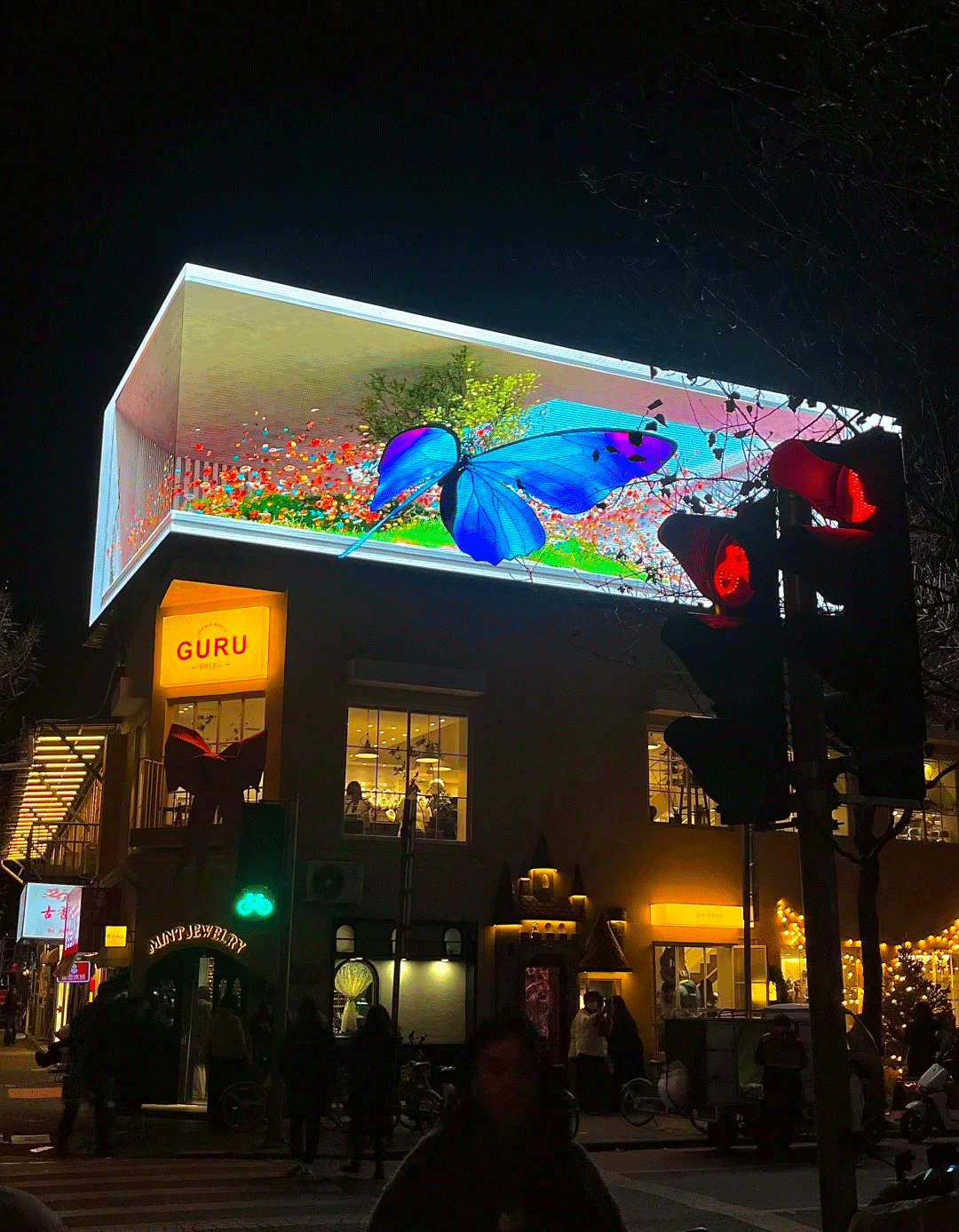
Hardware Foundations: Precision Engineering for Seamless 3D Billboard Splicing
Pixel Pitch Uniformity and Module-Level Calibration for Sub-Millimeter Alignment
Getting those invisible seams right on 3D billboards requires really precise engineering at the pixel level. The LED modules all need careful calibration so they match up perfectly across the whole display, usually keeping the spacing between pixels below about a millimeter even when panels are connected in large numbers. Special robots help align everything during assembly with incredible accuracy, down to fractions of a millimeter, which prevents any visible breaks in the image. The actual process involves several steps: first there's laser guided placement of each LED, then automated checks using optical sensors to confirm variations stay within 0.3 mm range, and finally some smart software that makes tiny adjustments in real time whenever it detects microscopic inconsistencies.
Without this module-level calibration, parallax effects would expose misaligned pixels at different viewing angles, collapsing the 3D illusion. Precision extends beyond installation: continuous monitoring systems detect pixel drift as small as 50 microns, enabling proactive recalibration before visible artifacts emerge.
Thermal Expansion Compensation and Structural Rigidity in Modular Frames
Outdoor 3D billboards face serious problems when metal frameworks expand and shrink due to changing temperatures. The solution? Many engineers now turn to special composite alloys for their modular frames. These advanced materials cut down on thermal expansion by around 70% compared to regular aluminum, which makes all the difference in maintaining shape stability. What's really clever is how these materials work alongside expansion joints specifically designed to soak up thermal stress before it becomes noticeable in the billboard panels themselves. Looking at actual installations, designers focus on several important components. They match mounting hardware coefficients precisely, install cross bracing systems that are pre-tensioned for extra strength, and incorporate polymer gaskets that resist moisture damage over time. All these features together create structures that stand up to weather extremes without compromising visual appeal.
This approach prevents cumulative misalignment—where daily temperature swings could otherwise cause up to 5 mm of panel displacement annually—and eliminates the "zipper effect," a visible gap formation between modules induced by thermal movement.
Control Intelligence: Synchronization and Real-Time Correction for Seamless 3D Billboard Performance
Hardware-Level Timing Sync and Motion Choreography Across Modular Panels
Getting everything perfectly timed is what makes those fancy modular 3D billboards work so well. The really top quality setups rely on special timing systems at the hardware level, which keeps updates consistent across all the panels down to fractions of a millisecond. This stops those annoying visual glitches when things move fast on screen. Behind the scenes, control units manage how each pixel moves around using secret formulas that figure out where objects should be as they cross from one panel to another. There are also built-in temperature sensors that send information to internal adjustment circuits. These help fix problems caused by metal frames expanding and contracting with changing weather conditions, something that might otherwise throw off panel alignment by nearly a millimeter or so.
GPU-Accelerated Warping and Geometric Correction for Dynamic Parallax Alignment
GPUs make it possible to fix perspective issues on the fly when someone looks at something from different angles. When people move around, these powerful chips work behind the scenes to constantly calculate new positions for pixels, adjust how edges blend together, and position layers properly in space. The magic happens through GPU accelerated warping techniques that keep the 3D effect looking natural as viewers shift their gaze. High end systems can actually maintain alignment within just under half a degree of angular difference. Special sensors built right into the equipment help with these corrections in real time, so everything stays coherent even when there's lots of movement happening on screen.
Proven Applications: How Leading 3D Billboard Installations Achieve Seamless Visual Continuity
Coca-Cola Times Square LED Cube: Vantage Point Optimization and Multi-Planar Depth Layering
The Coca-Cola LED Cube in Times Square is basically a masterclass in making sure everyone sees things right from their spot. They mapped out 72 different angles where people walk by or drive past, so no matter where someone stands, the cube looks good with just a tiny 0.3 degree difference in perspective. What makes it really cool? Layers of images stacked on top of each other create that 3D effect we all love. The bright parts (around 320 nits) pop off against the slightly dimmer background at about 220 nits, giving depth without needing actual space between layers. And here's something neat: special computer graphics tech adjusts everything in real time across those 1,200 separate panels as animations play out. This keeps everything aligned down to fractions of a millimeter, which lets those animated bubbles float right past real bottles mounted on the structure, creating that magical illusion of passing through solid objects.
Operational Requirements for Scalable, Seamless 3D Billboard Deployment
Getting those 3D billboards up and running smoothly depends on solid infrastructure that can handle whatever Mother Nature throws at them. The power system has built-in redundancy with dual circuits so there won't be any ugly blackouts right when ads need to shine brightest. These displays are sealed better than most IP65 rated equipment, standing up to rainstorms and dust storms without missing a beat. Temperature control is another key factor since LEDs don't perform well when they overheat or freeze. That's why we've got active cooling systems keeping things just right no matter what season it is. When something goes wrong, technicians can swap out faulty panels in under 15 minutes thanks to modular design, and nearby screens stay online during repairs. Our smart diagnostic system checks for pixel drift every day using some pretty advanced AI stuff, automatically fixing alignment issues before they get worse than 0.2 mm off track. Want to expand later? No problem. Standardized connectors make adding new modules straightforward, and our network handles data distribution efficiently even as installations grow bigger. Special low latency protocols keep everything synced up so massive displays don't end up showing different frames at once.
FAQ
Q: Why is pixel pitch uniformity important in 3D billboards?
A: Pixel pitch uniformity ensures that the images on 3D billboards align seamlessly without visible breaks, which maintains the illusion of depth and realism from various viewing angles.
Q: How do GPU-accelerated warping techniques benefit 3D billboards?
A: GPU-accelerated warping allows for real-time perspective adjustments, ensuring that the 3D effects look natural even as viewers move around, enhancing the display's dynamic visual performance.
Q: What measures are taken to prevent thermal expansion issues in outdoor 3D billboards?
A: Engineers use composite alloys and expansion joints to minimize thermal expansion in the modular frames, preventing shape distortion and panel displacement due to temperature changes.
Q: How do real-time corrections improve 3D billboard performance?
A: Real-time corrections, managed by intelligent control systems, ensure that all panels synchronize perfectly and adjust to environmental conditions, reducing visual glitches and enhancing overall display consistency.
Table of Contents
- Hardware Foundations: Precision Engineering for Seamless 3D Billboard Splicing
- Control Intelligence: Synchronization and Real-Time Correction for Seamless 3D Billboard Performance
- Proven Applications: How Leading 3D Billboard Installations Achieve Seamless Visual Continuity
- Operational Requirements for Scalable, Seamless 3D Billboard Deployment
- FAQ